
About panties – and what they can tell us about Venice
15.09.2026
How Verrocchio came to Venice – and left her Colleoni
15.09.2026
The Little Book That Actually Changed All of Europe
And no, I'm not exaggerating. Because when we talk about revolutions, we usually imagine armies, barricades, kings and palaces.
But this revolution was much quieter. It was contained… in the pocket.
Venice and the Man Who Made Books Mobile
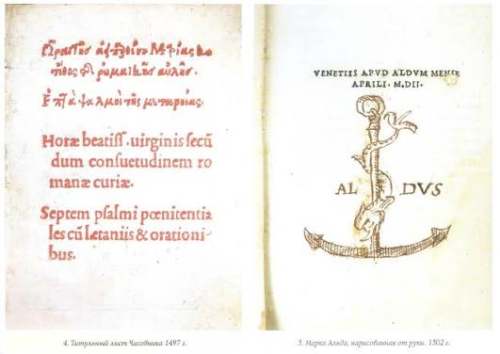
At the end of the 15th century he worked in Venice Aldus Manutius - one of the most outstanding publishers and printers of the Renaissance.
His main idea was surprisingly simple:
The book should not be huge, heavy, or the kind that can only be read at a table.
Manutius began publishing small-format books - octavo.
The page was about three times smaller than in large manuscript and early printed folios.
Such a book could already be take with you.
Put it in the bag.
Read on the go.
Hold in hands.
Today this seems perfectly obvious.
And then it was almost a revolution.
📖 The book that went to a man
Before this, the book was primarily an expensive and prestigious item.
Large volumes were expensive, took up a lot of space, and were often associated with a library, monastery, or scholar's office.
But Manutius actually asked a completely different question: What if the book itself comes to the person?
And she went.
But his revolution did not end there.
🏛️ Venice is bringing antiquity back to Europe
Manutius published not only contemporary texts.
He returned to the European reader ancient authors - Plato, Aristotle, Sophocles, Homer and many others.
And there's a very important point here. Venice was more than just a beautiful city with canals.
She became one of the main intellectual and publishing centers of Europe. Manuscripts, scholars, translators and publishers flocked here.
Met here: Greek antiquity, Latin culture, Byzantine tradition and new European humanistic thought.
And around his printing house, Manutius created a real intellectual network.
He even founded Aldine Academy — a circle of humanists who worked with Greek texts.
✒️ Even the font became part of the revolution
Manutius understood one thing very well: A good book is not just about the content.
It's also a form. It is with his publications that the famous italic.
It was created for the Aldine Press by an engraver and calligrapher. Francesco Griffo.
And italic wasn't just a pretty font. It allowed for more text to fit on a small page.
That is, even the font worked towards the main idea:
make the book compact, convenient and suitable for reading.
🐬 "Make haste slowly"
Manutius's famous publisher's mark also appeared on his publications: a dolphin wrapping itself around an anchor.
It is associated with the ancient motto: Festina lente — "make haste slowly."
Just think about it. Venice at the end of the 15th century. A man creates more than just a printing press.
It creates: publishing logo, recognizable font, proprietary format, editorial policy and quality system.
In fact - publishing brand long before the word "branding" even appeared in our vocabulary.
📚 So what did the little book do?
She did much more than just become more convenient. She changed the culture of reading itself. The book has ceased to be just an object to be kept.
She became an object that carry with them. And ideas began to travel with her.
From person to person.
From city to city.
From one generation to another.
And here's what I especially like about this story
We're used to thinking that big changes look big—loud. impressive.
But sometimes a revolution starts quite differently. From a small page. From a new font. From good editorial work. From the idea of making a complex thing a little more accessible.
And one day it turns out that this small change has already changed the way millions of people read, think, and share knowledge.
So the next time you're walking around Venice and see an old printing house or just pick up a small book, remember:
there used to be such a small book a great technological and cultural revolution.
And perhaps one of Venice's most important revolutions had nothing to do with ships, wars, or gold at all.
It started with a page that could finally be put in your pocket.
And carry it further.
Along with the idea.