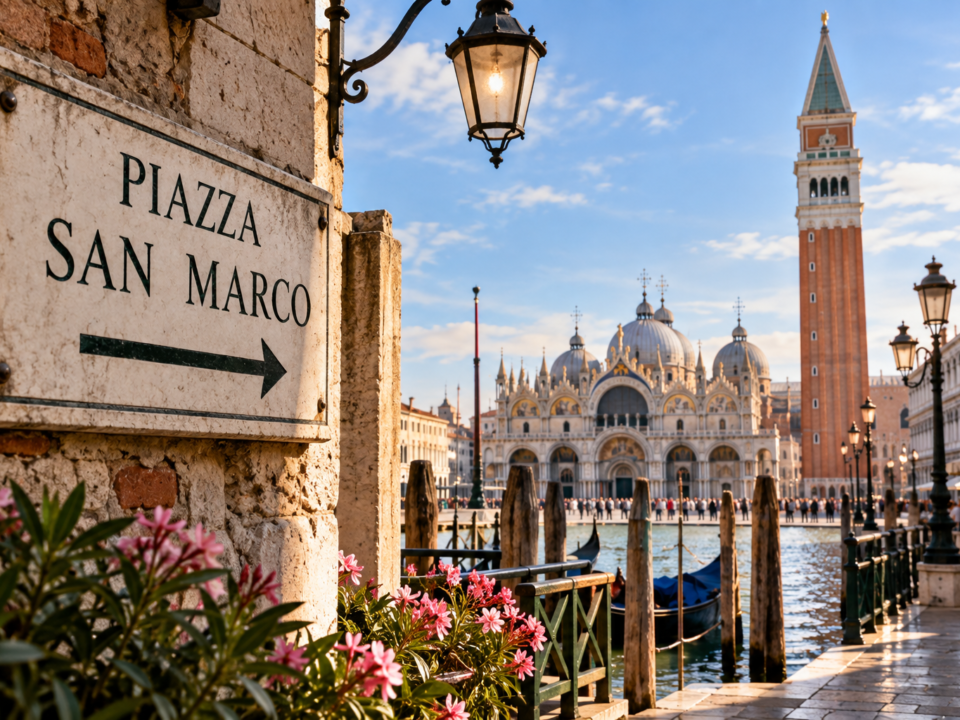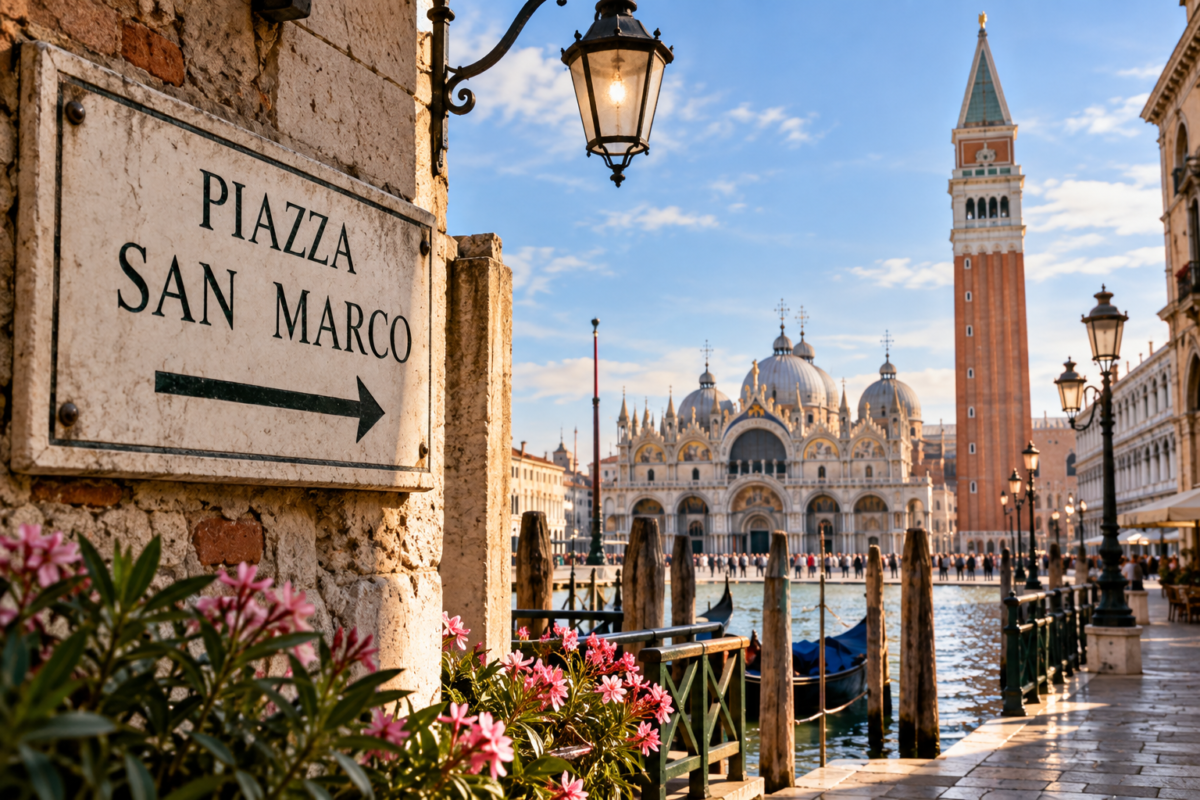
"How do I get to San Marco?" is a question that sometimes begins a visit to Venice.
16.09.2026
Why Venice Literally Stands on Stilts—and Why It's Much Scarier Than It Sounds
Imagine the city you see in front of you.
Palaces. Churches. Bridges. Stone embankments.
Enormous buildings that weigh thousands of tons.
Now I suggest you watch not up. And down.
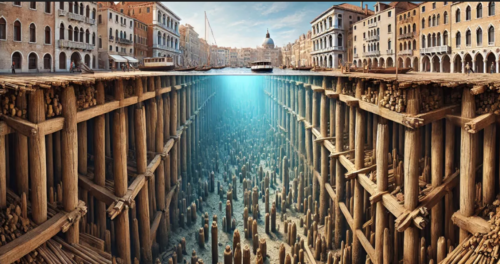
Because underneath all this beauty, water, silt and thousands of wooden piles.
And this is where the fun begins.
🌿 Venice wasn't just built on water
The Venetians didn't just start building houses right in the middle of the lagoon. They first searched for areas of the seabed where they could create a sufficiently solid foundation for construction.
Then wooden piles were driven into the soft ground -One, The second one, Hundreds, Thousands…
And on top of this wooden structure they created a foundation on which it was already possible to erect stone structures. Palaces, Churches, Houses, Entire neighborhoods.
Thus, little by little, a city arose over the lagoon that today seems almost impossible.
But why didn't the tree rot?
This is where the real miracle begins. It would seem that the wooden piles, which have been submerged in water for centuries, should have rotted away long ago. But they're not just submerged in water.
Most of the piles are driven into the ground, where very little oxygenAnd without sufficient oxygen, the microorganisms that destroy wood have a much harder time working.
Over time, the wood also becomes saturated with minerals from the water and soil. As a result, the piles can last for centuries.
That is, Venice literally relies on a wooden structure hidden under water and silt.
It sounds almost like a fairy tale.
But now comes the most interesting part.
⚠️ Venice is not invulnerable
The fact that the wooden piles have survived for centuries does not mean that Venice is not in danger.
Vice versa.
The city is very sensitive to what happens to its soil and water. Soil subsidence. Tides. Sea level rise. Changes in the lagoon.
All of this is having an impact on Venice. And the city isn't just "floating."
He gradually settles, while the water level relative to the city rises.
That's why the famous acqua alta — "high water" — this is not just an inconvenience for tourists who suddenly have to move around the city on wooden walkways.
It's a reminder of how unusual Venice's very design is.
🌊 The city we don't see
We walk around Venice and see stone: marble. brick. facades. bridges. palaces.
But literally under our feet there is a completely different world - Tree. Ill. Water. Stone.
And thousands of structures that hold up everything that we are accustomed to simply calling Venice.
And you know what amazes me most?
We see the city as it is today.
And literally under our feet lies the system that we have begun to create. more than a thousand years ago.
Pile after pile.
Layer by layer.
Generation after generation.
And then Venice seems almost impossible
So next time you hear:
"Venice stands on stilts"
Don't just imagine a few wooden poles in the water.
Imagine the whole city, which people actually collected over the lagoon.
A city under which a whole wooden world is hidden.
And then Venice seems more than just beautiful.
And almost impossible.