

Venice 7000 chimneys
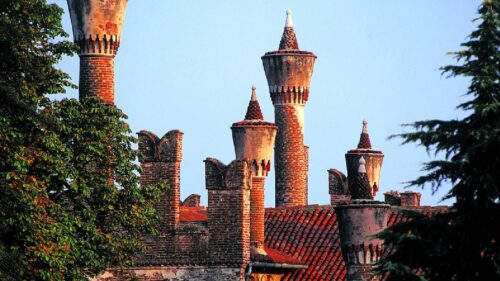
According to preliminary estimates, there are approximately 7000 chimneys!
Those familiar with Venice will understand that the urban landscape here is very dense: palazzi are located close to each other and separated by narrow calles and culettas. This creates the opportunity to observe from the roofs an interesting collection of chimneys of various shapes, some of which are quite original compared to those seen in other cities.
It is clear that these minor architectural details were not originally intended to be such striking elements that would become objects of study and admiration around the world. They arose from the need to create a healthier atmosphere in homes. In the past, before fireplaces appeared in homes, residents faced the problem of heating their homes on cold, damp winter days without the risk of smoke poisoning. At first, they lit fires inside, leaving small holes in the roof for ventilation. However, this solution led to large heat losses and contributed to the penetration of moisture inside.
Thus, the Venetians soon realized the need for a structure that would provide forced smoke exhaust and protect the roofs - originally made of thatch - from the frequent fires caused by hot sparks from the flames.
The first inhabitants of Venice began to design chimneys with great skill, which allowed them to create a unique style of these elements, different from similar ones in other cities.
From the very beginning, the construction of fireplaces was treated with great care, and already In 1200, the Scuola dei Mureri, or School of Stonemasons, was founded, which taught the art of creating this design. The importance of skill in this business is confirmed by the fact that in order to receive a qualification, it was necessary to successfully pass a final exam. Students had to build a fireplace that met several requirements, including compliance with the architectural styles of their time.
 |
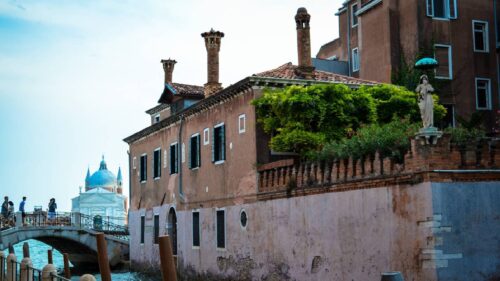 |
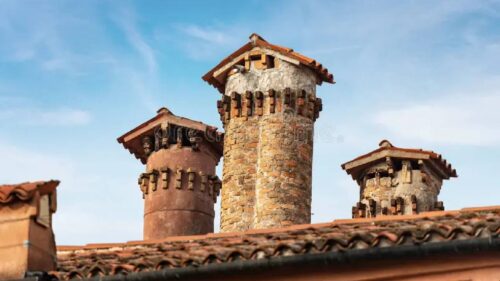
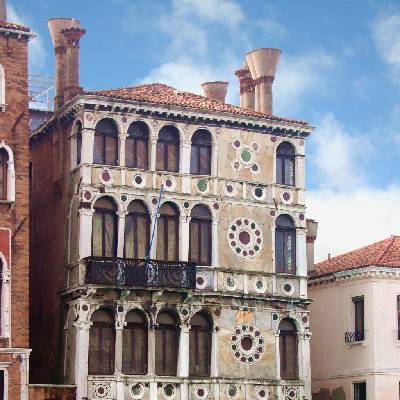
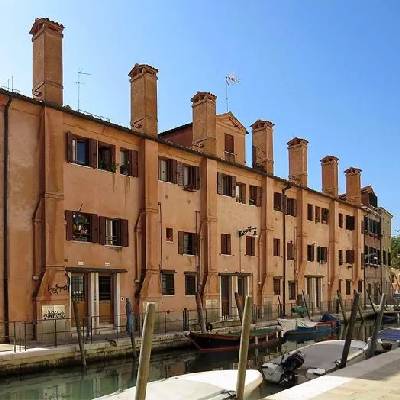
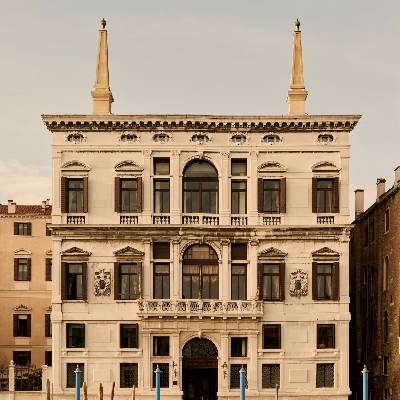
If you look closely at the city's rooftops, you'll notice that the chimneys come in a variety of shapes. There are bell-shaped, the most common, resembling an inverted cone, as in Ca' Dario; cubic, as in Casa 7 kamini; And forked — this style came to the city from the interior of Veneto. Around the middle of the 16th century, chimney obelisks were added to these categories — refined and elegant elements. They, like those in Palazzo Mocenigo (later demolished), Palazzo Balbi, Palazzo Papadopoli, Palazzo Minelli and Palazzo Belloni, proudly rose above the magnificent buildings, subsequently becoming a distinctive feature of the architecture. These structures had a hollow interior, which made them lighter and allowed sparks to be extinguished when smoke escaped through holes in the base. There is a legend that such chimneys indicated the presence of a “captain general da mar” in the family of the owner of the palace, but this opinion is not entirely true, because only the Balbi and Mocenigo families could boast of captains in their family. Over time, many of these chimneys were destroyed, as their impressive height attracted lightning.
Because of this, this type was no longer used, and lightning rods were installed on the others instead, thanks to which these wonderful components can be preserved to this day. Fortunately…
These are some of the more recognizable categories, to which it is worth adding the changes made in each of them over time.
The common element in this variety of forms were tiles or caps designed to protect the chimneys from rainwater, as well as the design of the chimneys themselves, which conventionally drew in smoke and directed it to the side openings for its release outside.
In decorating the chimneys and enhancing their artistic value, works of art played a significant role. Giorgione and Titian, as well as prominent architects such as Palladio, Scamozzi, Lombardo and Sansovino.
To complete this pictorial picture, I would like to recall the image of a figure inextricably linked with chimneys - scoacamini, chimney sweep, after whom the calla lily they inhabited was named. This endlessly soot-stained man who wandered the roofs of majestic Venice.
| Ca'Dario | Casa 7 Camini | Palazzo Papadopoli |
 |
 |
 |
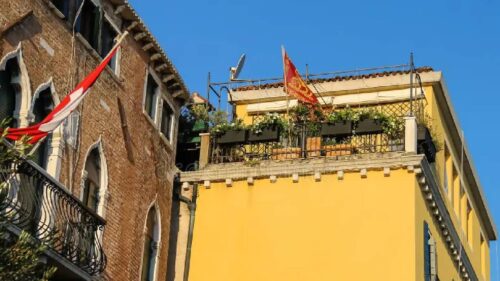
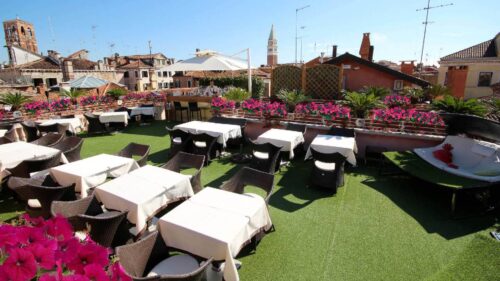
Altana - Venice's rooftop terraces
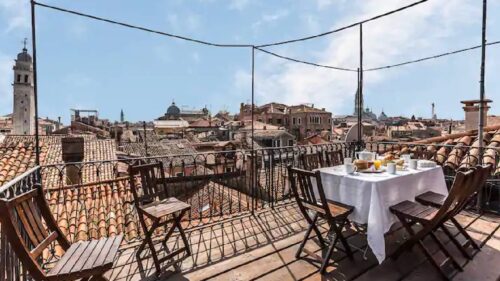
Elements that can be classified as small structures definitely include: Altans: These are a kind of terrace, consisting of platforms made of wooden panels supported by a series of compact brick or stone columns.
Since such structures acted as an addition to the main building, the choice of building materials had to meet two very important criteria: lightness and resistance to environmental influences, including salinity. In this regard, larch wood was used from the first buildings.
For centuries, terraces remained a constant feature of city life. They were spaces where residents gathered to hang out fox fur coats or laundry, taking advantage of the sun and fresh air that filtered through the wooden planks.
During the period Renaissance terraces became a kind of aesthetic space, because Venetian women of the time sought to lighten their hair by applying special mixtures and exposing it to the sun. For this procedure, they used something resembling a wide hat called a solana, on which they placed their hair - this was reminiscent of the shatush technique developed by a famous Italian stylist. Perhaps he was inspired by this native Venetian practice?
Thanks to their unique location, the altanas served as an ideal vantage point for observing the festivities, especially for us Venetians, with whom we have a deep connection, including the Feast of the Savior. This creates a more intimate experience, shared with family and friends.
Over time, altans have become a popular place to enjoy sunny days and cool summer evenings, not to mention the joy of enjoying a spritz on an altan and an aperitif with friends in this city!
For tourists who cannot spend the evening in an altan, there are many restaurants, osterias and bars that offer their treats in altans to give a feeling of lightness, cool breeze and stunning views.
Even such masters as Vittore Carpaccio in his work "The Miracle of the Relics of the Cross" and Giovanni Mansueti in "The Miracle of the Relics of the Cross in Campo San Lio", could not remain indifferent to the magnificent charm that the Altans radiate.
 |
 |
 |
 |
Liago of Venice: loggias suspended from the light
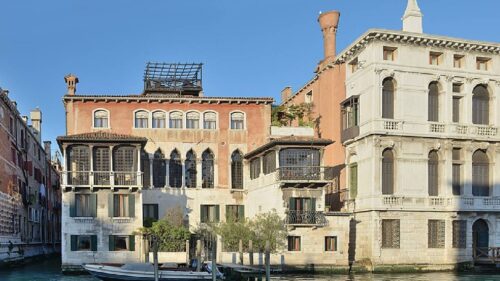
Looking at Venice from above, it becomes obvious that many palazzi have loggias that project from the facades, located on the upper floors and framed by windows on three sides. These loggias are called liagò. According to Giuseppe Burio, the authoritative dictionary of the Venetian dialect, This word comes from the Greek heliacon, which translates as "a place open to the sun."
From the early days of construction, when wood was used primarily and maritime technology was applied, the Venetians felt the need to “capture” the sunlight that barely penetrated the familiar, narrow streets known as calli.
The first mentions of such structures date back to the 12th-13th centuries, although the term was often used as an analogy for later buildings designated as "Altana". It is a wooden platform installed on the roofs of buildings, and sometimes completely replacing them.
For example, in 1316 Major Consiglio decided to dismantle the liagos located on the canal, which was probably due to their unreliability and potential threat.
One of the most striking examples of such loggias is Palazzo Falle Canossa, the residence of the doges and bishops, located on a hill overlooking the Grand Canal. There are two loggias, one on each side of the façade. These loggias are quite large and are not just lighted spaces, but full-fledged rooms overlooking the waters of the canal. Certainly a convenient location!
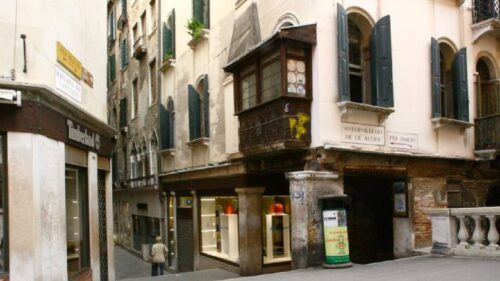
Another significant example is casino venier, also known as Ridotto Venier, which played a very unique role as an unseen observer of Ponte dei Bareteri, located below. This use of liago was necessary due to the secretive nature of these establishments, where gambling, literary and musical events intersected. This again demonstrates how places acquire specific symbolic meanings depending on the actions and interactions that take place there, giving them an identity that transcends their physical characteristics.
In fact, the liago was most often used by Venetian ladies to sunbathe and dry their hair. This use, in contrast to the previous example, reveals a domestic reality in which social interactions took place in these small, sunlit spaces.
| Palazzo Falle Canossa | Ridotto Venier |
 |
 |
And most importantly, remember that when visiting the most beautiful city on the planet, it is worth looking up from time to time, because Venice will always find a way to surprise you!
See you in Venice!