
The mechanism of power without a crown
14.09.2026
The Little Book That Actually Changed All of Europe
15.09.2026
About panties – and what they can tell us about Venice
Panties were not "invented" at any one moment.
The history of underwear is a story about how people's attitudes towards the body, decency and clothing have changed.
And Venice is especially interesting here.
🔥 Where did panties come from anyway?
Have you ever wondered who was the first to decide:
"So... I guess there needs to be one more thing between me and the dress."
In fact, the history of underwear is much older than it seems.
Even in Ancient Egypt they wore loincloths, and the Romans had subligaculum - something like a short headband or very simple shorts under clothing.
But then the most interesting part begins.
Medieval Europe: Men Already Wear Underpants
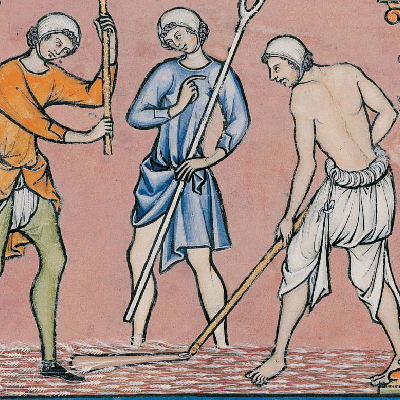
In Medieval Europe, men wore braies - rather loose linen trousers that tied at the waist and sometimes reached almost to the knees.
But with women everything was much more modest.
For a long time, the main underwear remained a long linen shirt - chemise.
And separate panties were not always an obligatory part of a woman’s wardrobe.
So if you imagine a medieval lady in a beautiful dress, corset and little lace panties -
Forget it. 😄
Lace panties will come much later.
Men's clothing is starting to get shorter
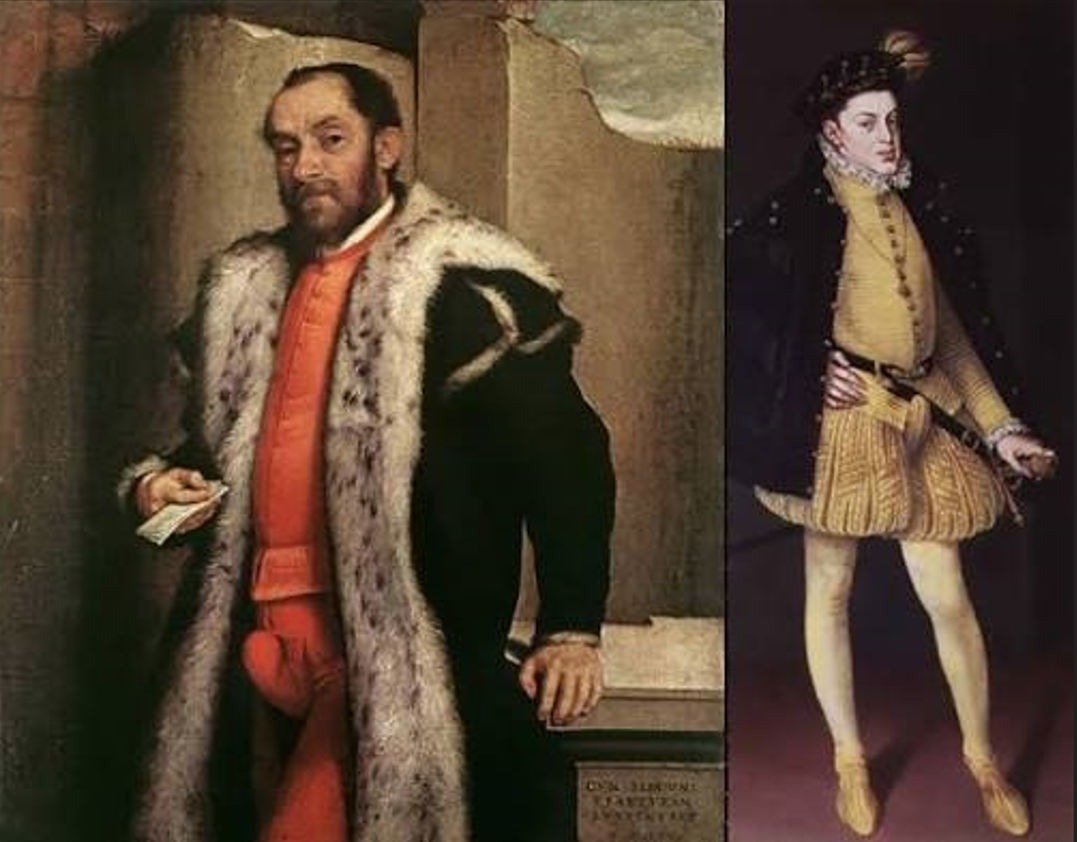
Over time, men began to shorten their braies.
Clothes became shorter, stockings became longer, and the silhouette became more and more form-fitting.
And at some point a rather funny problem arose.
The male anatomy became too visible.
This is how the famous one appeared codpiece — codpiece.
Initially, it was a very practical thing: it covered the space between two pieces of clothing.
But fashion, as always, decided that simply closing it down was not enough.
Codpieces began to be enlarged, decorated, made stiffer, and sometimes even stuffed.
That is, a Renaissance man could literally say with his costume:
What about women?
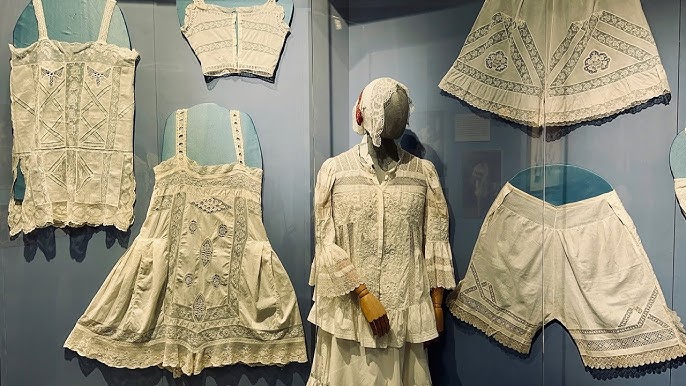
This is where the story gets much more interesting.
In Italy, there are separate women's mutande appear in documents as early as the late Middle Ages, but for a long time remain rather an exception.
In one Italian will 1268 flaxseeds have already been mentioned mutandas, and in documents from the 14th–15th centuries, there are separate designations for women's and men's underwear.
But the presence of such things in documents does not mean that everyone wore them.
Because panties weren't just a matter of convenience.
They were a question decency.
🇮🇹 Do you know who wore underwear in 16th-century Venice?
This is where the most unexpected thing begins.
Women's panties existed.
But they were not yet a common part of a woman’s wardrobe.
In Italian sources of the late 16th century there appear braghesse - women's underpants.
And do you know who celebrates them especially?
At prostitutes'.
Yes, that's exactly it.
Why?
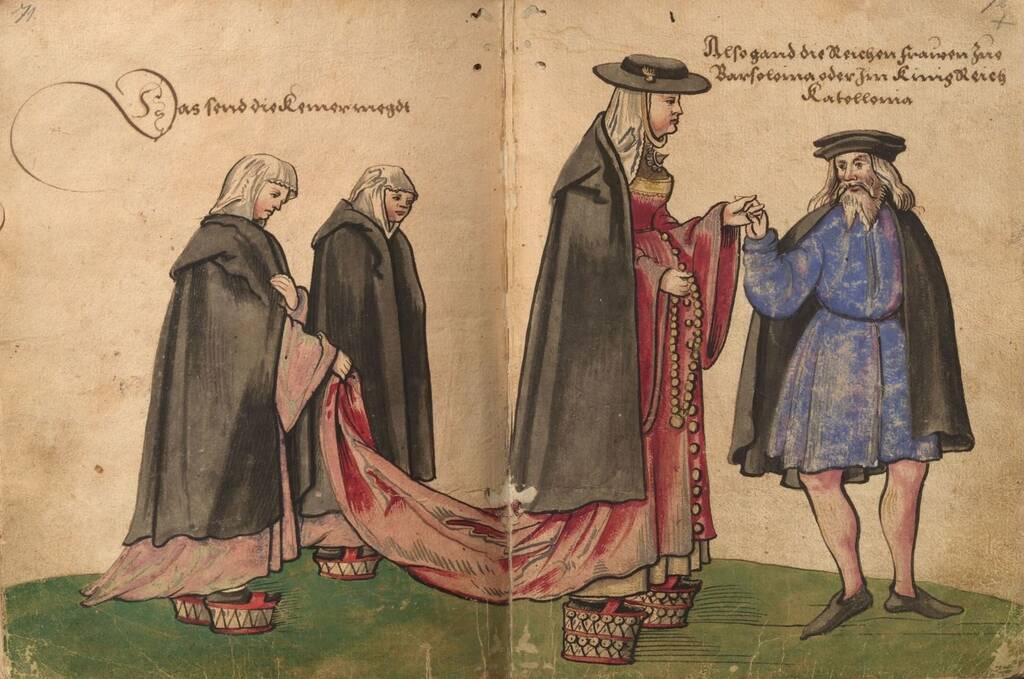
Тут есть несколько объяснений.
Во-первых, это было просто удобно.
Венецианские женщины носили длинные платья, ходили по улицам, садились в гондолы, поднимались по лестницам, носили высокие chopine…
И дополнительный слой одежды был совсем не лишним.
But there was another side.
The panties were too close to the body.
А женское тело в ту эпоху — особенно тело «порядочной» женщины — должно было быть максимально скрыто.
Therefore, separate underwear remained something optional and even suspicious for a long time.
Venice and its courtesans
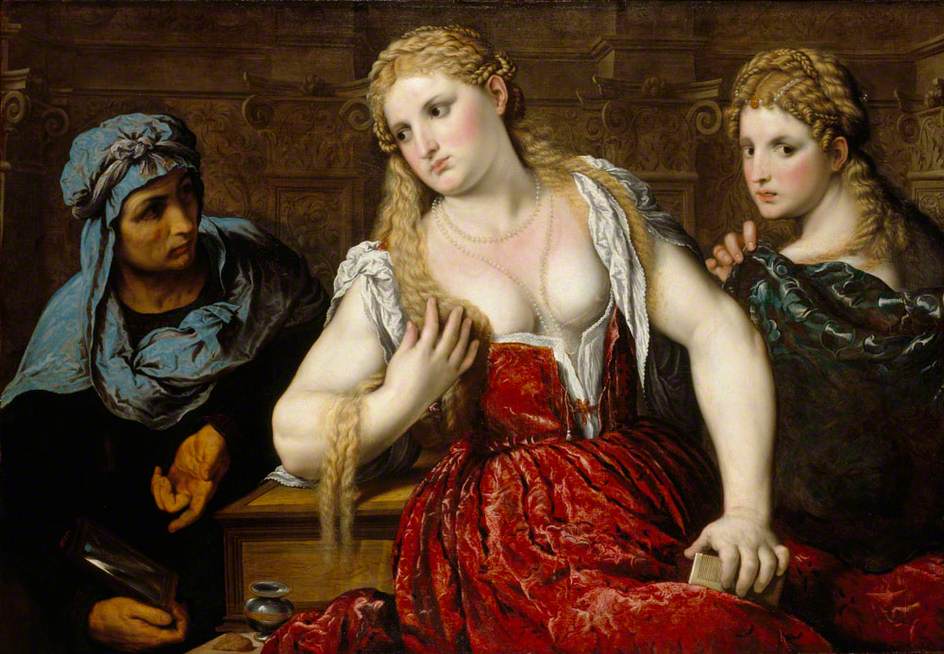
And here appears one of the most interesting figures of Venetian society of the 16th century - cortigiane, courtesans.
These were not just prostitutes in the usual sense of the word.
Some of them were educated, dressed well, knew literature and music, and could hold a conversation with aristocrats and artists.
The most famous of them is, of course, Veronica Franco.
And the problem for Venetian society was one:
A courtesan could look almost as luxurious as a noble lady.
When clothes start to deceive
At the end of the 16th century, Pietro Bertelli produced images of Venetian courtesans, in which a raised skirt literally transformed the image into a small erotic spectacle.
The viewer was shown clothes and shoes chopine and the lower part of the woman's costume.
A little later, Giacomo Franco created a whole series of images of Venetian women – noble ladies and courtesans.
And the most interesting thing:
Sometimes it was almost impossible to tell them apart by their clothes.
The artist deliberately played with this uncertainty.
Imagine Venice in the 16th century
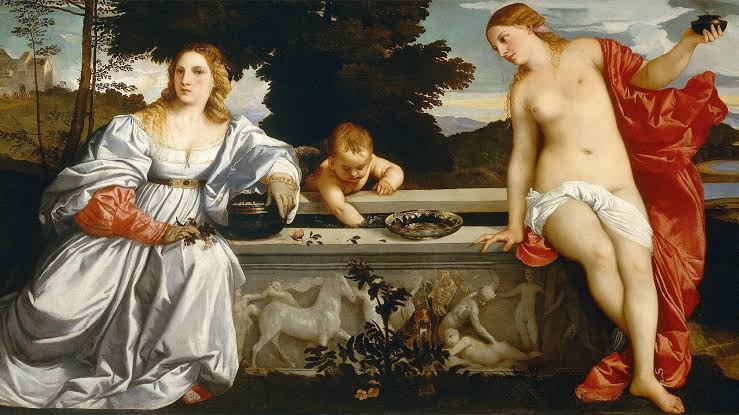
Before you is a woman - a luxurious dress, jewelry, silk, high chopine, beautiful hairstyle.
And you think: "Probably a noble lady."
And she may well turn out to be a courtesan.
And that's where those same ones appear mutande.
It turns out to be a surprising paradox. What today is a symbol of ordinary everyday clothing may once have been associated with a woman considered indecent by society.
And then everything changed
Gradually, attitudes towards underwear changed.
In the 16th century, women's underwear was still a rarity. In Italy, they were mentioned in individual wardrobes, and in Venice braghesse especially associated with prostitutes.
But over time, underwear becomes a familiar part of a woman's wardrobe.
In the 19th century, long pantaloons, corsets, petticoats, and crinolines appeared.
And underwear is no longer just a protective layer between the body and the dress.
She becomes silhouette shaping tool.
А затем появляются современные трусы — короткие, удобные, массово производим
And here's what I especially like about this story
We perceive underwear as a completely natural thing. So natural that we don’t even think about the fact that we once their absence was the norm.
And then fashion invented panties. Then it decided they should be long. Then short. Then lacy. Then seamless.
And each time, along with the clothes, the idea of what exactly is considered decent.
So the history of panties isn't really about panties at all. It's a story about what different eras believed:
- decent,
- indecent,
- beautiful,
- seductive,
- acceptable.